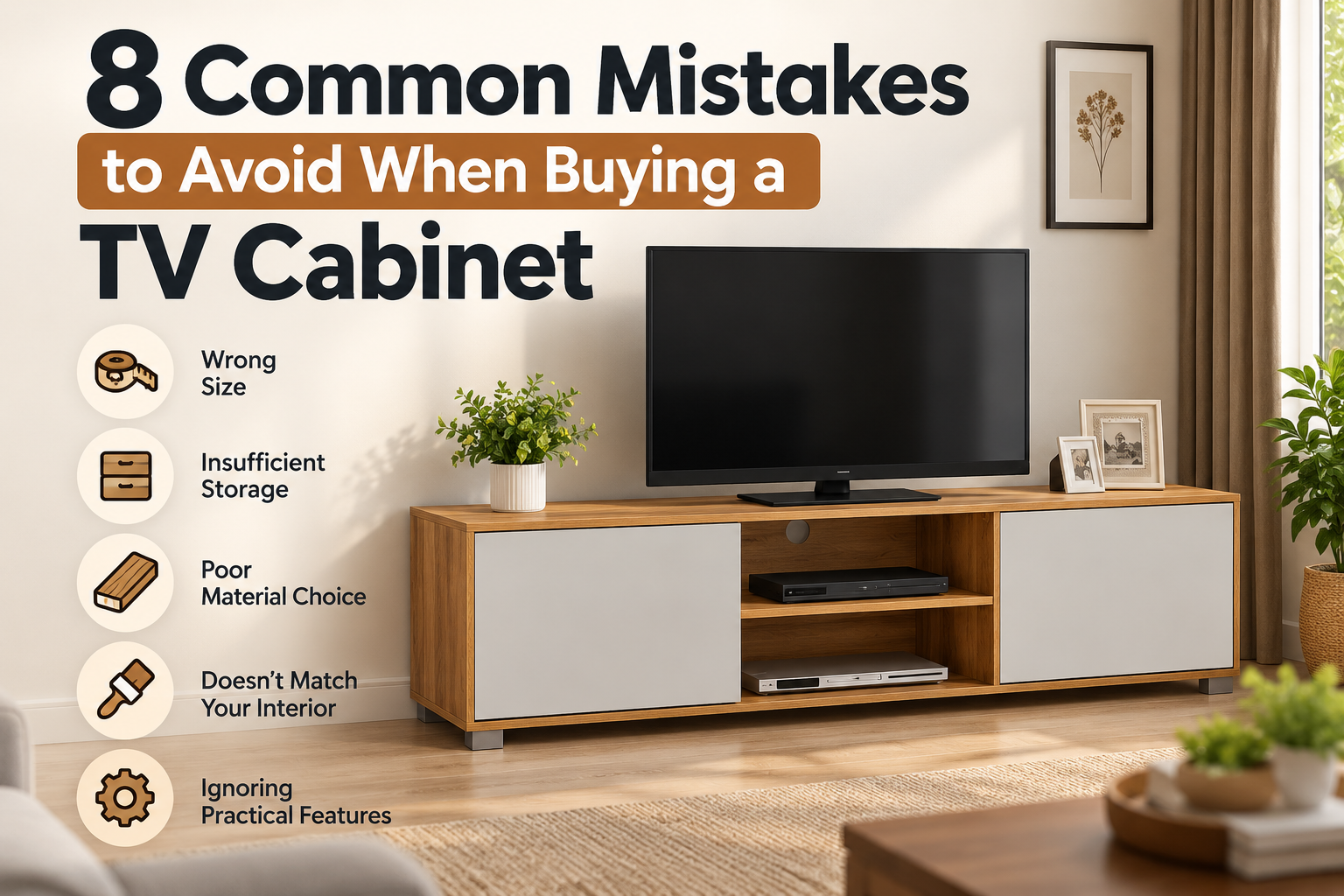
A TV cabinet is more than a piece of furniture placed beneath your television. It helps organise entertainment devices, provides storage for everyday essentials, manages cables, and contributes to the overall appearance of your living room. Choosing the right TV cabinet can make your space look organised and functional, while the wrong one can create problems with proportions, storage, accessibility, and everyday use.
With so many TV cabinet designs, materials, sizes, and storage options available, it is easy to focus only on appearance and overlook practical details. A cabinet that looks attractive online may not fit your television properly, accommodate your set-top box, or provide enough room for your accessories. Similarly, choosing a design without considering your room layout can make a compact living room feel crowded.
Whether you are furnishing a new home or upgrading your existing entertainment area, understanding common buying mistakes can help you make a more informed decision. From measuring your space correctly to comparing materials and checking storage requirements, a little planning can help you choose a TV cabinet that suits your needs and budget.
Here are eight common mistakes to avoid when buying a TV cabinet, along with practical tips to help you select the right option for your home.
1. Choosing the Wrong TV Cabinet Size
One of the most common mistakes is purchasing a TV cabinet without checking its dimensions against the television and the available floor space. A cabinet that is too small may look disproportionate beneath a large screen, while an oversized unit can overwhelm a compact living room.
The width, height, and depth of the cabinet all influence its practicality. Before choosing a design, measure the space where you intend to place it and compare those measurements with the product specifications.
What should you measure before buying?
- Television width: Check the actual width of your TV rather than relying only on its advertised screen size in inches.
- Available wall space: Measure the width of the wall and account for nearby doors, windows, furniture, and walkways.
- Cabinet height: Consider your seating position and the height at which you want the television to be viewed.
- Cabinet depth: Make sure the unit fits comfortably without obstructing movement through the room.
- Surrounding furniture: Leave enough space between the TV cabinet, sofa, coffee table, and other furniture.
For example, if you have a 55-inch television, check its actual width and compare it with the cabinet's width. A cabinet that is slightly wider than the television can create a balanced appearance, provided the room has enough space. Also check whether the television's stand fits securely on the cabinet's top surface.
If you plan to wall-mount your television above the unit, the cabinet still needs to be positioned at a practical height and leave adequate clearance for accessories and ventilation.
Buying tip: Always check the complete dimensions listed on a TV cabinet product page. Do not assume that a cabinet will fit simply because it is described as suitable for a particular TV size.
2. Prioritising Design Over Storage Requirements
A stylish TV cabinet can improve your living room, but its appearance should not be the only deciding factor. Many buyers select a design based on its finish or shape and later realise that it does not have enough room for their entertainment accessories.
Depending on your household, you may need space for a set-top box, gaming console, router, speakers, remote controls, charging cables, DVDs, books, or decorative items. Without adequate storage, these belongings can quickly clutter the entertainment area.
Which storage features should you consider?
Look for a TV cabinet that matches the items you intend to store.
- Drawers: Useful for keeping remote controls, cables, batteries, and small accessories out of sight.
- Open shelves: Suitable for devices that require easy access, such as set-top boxes and gaming consoles.
- Closed compartments: Help keep miscellaneous belongings organised and reduce visible clutter.
- Adjustable shelves: Offer flexibility when storing devices of different sizes, if the selected model includes them.
Cable openings: Make it easier to route wires through the cabinet and connect devices neatly.
The best storage configuration depends on how you use your television. A family that regularly plays video games may need accessible shelving for consoles and controllers. Someone who primarily watches streaming services may prefer a simpler TV cabinet with limited storage.
Before purchasing, make a list of the devices and accessories you want to accommodate. Check the dimensions of larger items and compare them with the cabinet's internal storage measurements wherever these are provided.
Buying tip: Choose a TV cabinet with storage based on your actual requirements rather than paying for compartments you will rarely use.
3. Ignoring the Material and Build Quality
Another mistake is selecting a TV cabinet based only on its price or finish without checking the material and construction. The material affects the cabinet's appearance, weight, maintenance requirements, and suitability for everyday use.
Different materials offer different advantages, so the right choice depends on your budget, room conditions, and expectations.
Understanding common TV cabinet materials
Engineered wood: Engineered wood furniture is available in various finishes and designs. It can be a practical option for buyers seeking a contemporary appearance and functional storage at a considered price. However, quality depends on the board type, thickness, construction, and finishing.
Solid wood: Solid wood cabinets can provide a distinctive natural appearance and may be suitable for buyers who prefer traditional furniture. They can be heavier and more expensive, depending on the wood species and construction.
Metal and mixed-material designs: Cabinets combining metal and wood-based panels can suit industrial or contemporary interiors. Their suitability depends on the quality of the frame, joints, shelves, and surface finishes.
When comparing products, check more than the material name. Look at the construction details, edge finishing, joints, shelf support, hardware, and stated load capacity.
A cabinet's top panel must be suitable for the weight of the television and any other equipment placed on it. If the product specifications provide a maximum load, verify that your intended setup falls within that limit.
It is also important to understand the difference between water-resistant and waterproof surfaces. Do not assume that a wood-based cabinet can tolerate spills or prolonged exposure to moisture.
Buying tip: Review the product specifications and assembly instructions before placing an order. A well-designed cabinet should meet your practical requirements, not just match your preferred colour.
4. Selecting a TV Cabinet That Does Not Match Your Interior
A TV cabinet is often a prominent feature of the living room, which makes its colour, finish, and overall design important. Choosing a cabinet that clashes with your existing furniture can make the space feel visually unbalanced.
For example, a dark cabinet may look striking against a light wall, but it can appear heavy in a small room with limited natural light. A light-coloured cabinet may complement neutral interiors but might not suit every flooring or furniture finish.
How to match a TV cabinet with your living room
Consider the following elements before making a choice:
- Wall colour: Choose a finish that complements the wall rather than competing with it.
- Flooring: Consider whether the cabinet's wood tone works with your floor colour.
- Existing furniture: Look at the sofa, coffee table, side tables, and bookshelves to create a consistent visual style.
- Room size: Simpler designs and lighter finishes may help a compact space feel less visually crowded.
- Interior theme: Minimalist, contemporary, traditional, and industrial interiors may call for different cabinet styles.
For a neutral living room with beige walls and light flooring, a natural wood-look TV cabinet can add warmth without creating too much contrast. In a room with darker furniture, a complementary wood tone or contrasting light finish may help balance the overall look.
You do not need every piece of furniture to have the same finish. Instead, aim for a consistent combination of colours, textures, and proportions.
DeckUp offers a brand to consider when comparing furniture options for a coordinated home interior. Before selecting a particular TV cabinet, review the available design, finish, dimensions, and storage details to determine whether it suits your space.
Buying tip: Compare the cabinet's product images with your existing room colours and check the finish description. Screen settings and lighting can affect how colours appear in online photographs.
5. Forgetting About Cable Management and Ventilation
A TV cabinet may provide ample storage but still be inconvenient if cables are difficult to organise or electronic devices have insufficient ventilation.
Visible wires can make an otherwise tidy entertainment area look messy. Poor cable access can also make it harder to connect devices, replace cables, or troubleshoot equipment.
Ventilation is equally important. Set-top boxes, routers, gaming consoles, and other electronics may generate heat during operation. Placing them in a tightly enclosed compartment without adequate airflow can cause heat to build up.
What should you check?
Before buying a TV cabinet, look for the following features:
- Cable-management holes or openings at the back.
- Sufficient space behind the cabinet for plugs and cable bends.
- Open shelves or ventilation openings for heat-generating equipment.
- Easy access to power sockets and connections.
- Enough clearance to connect and disconnect devices without moving the entire cabinet.
If the cabinet has closed compartments, check whether they are appropriate for the electronics you intend to store. Avoid blocking ventilation openings or enclosing equipment in a way that conflicts with the manufacturer's instructions.
You should also plan the position of power strips and cables before installation. Keep electrical connections accessible, avoid overloaded sockets, and prevent wires from becoming a tripping hazard.
Buying tip: Do not assume every TV cabinet includes cable-management openings. Check the product images, specifications, or assembly manual before ordering.
6. Not Considering the Television's Height and Viewing Position
A TV cabinet can fit your room perfectly and still create an uncomfortable viewing arrangement if its height is unsuitable.
The ideal viewing position depends on your television's size, your seating height, your distance from the screen, and whether the TV will sit on the cabinet or be mounted on the wall.
A television placed too high may cause discomfort during longer viewing sessions, while a screen positioned too low may not provide a comfortable viewing angle from your sofa.
How to choose the right cabinet height
Start by considering your usual seating position. When seated comfortably, the centre of the television screen should generally be close to eye level. The exact arrangement may vary depending on the room and viewing habits.
If your TV will sit on the cabinet, calculate the total height by adding the cabinet height, the height of the television stand, and the screen's dimensions. Check that this arrangement provides a comfortable viewing angle.
For a wall-mounted television, measure the intended mounting height and select a cabinet that works proportionately beneath the screen. Remember to account for the space needed for a soundbar or other accessories.
Families with children should also consider stability and safety. Secure the television according to its manufacturer's instructions, and use suitable anti-tip measures where appropriate.
Buying tip: Plan the entire viewing setup before purchasing the cabinet. This is more reliable than choosing a unit based on its height alone.
7. Overlooking Assembly, Maintenance, and Product Support
Online furniture shopping makes it easier to compare different TV cabinet designs, but product photographs do not tell you everything about installation and long-term care.
Some buyers overlook assembly requirements, delivery arrangements, warranty coverage, or the maintenance needed to keep a cabinet in good condition. These details can affect the overall buying experience.
What should you check before ordering?
Assembly requirements: Check whether the cabinet arrives assembled or requires self-assembly. Review the instructions and determine whether additional tools or assistance may be needed.
Package dimensions: If you live in an apartment, check whether the packaged furniture can pass through doorways, staircases, lifts, and narrow passages.
Warranty and support: Read the applicable warranty terms and check what they cover. Confirm how to contact customer support if parts are missing or a component is damaged.
Cleaning requirements: Check the recommended cleaning method for the cabinet's surface. Different finishes may require different care.
Delivery and returns: Review delivery charges, expected delivery timelines, return eligibility, and the procedure for reporting transit damage before placing your order.
For regular maintenance, use a soft cloth and follow the manufacturer's care instructions. Clean spills promptly, avoid harsh chemicals unless specifically permitted, and do not place wet items directly on surfaces that are not designed to handle moisture.
If you are comparing DeckUp TV cabinet options, review the product information and applicable purchase policies before deciding which design offers the best fit for your requirements.
Buying tip: Evaluate the complete purchase, including delivery, assembly, warranty, and maintenance, rather than comparing products on their listed prices alone.
8. Choosing a TV Cabinet Without Comparing the Total Cost
A low purchase price can be attractive, but it should not be the only factor influencing your decision. Two TV cabinets with similar appearances may differ in material, dimensions, storage capacity, finish, assembly requirements, and after-sales support.
Likewise, a more expensive cabinet is not automatically better. Its value depends on whether the additional features are useful to you.
How to compare TV cabinet prices effectively
Before choosing a product, consider:
- Dimensions and capacity: Does the cabinet fit your television and equipment?
- Material and construction: Are the materials and hardware suitable for regular use?
- Storage features: Does it provide the compartments you actually need?
- Assembly costs: Is assembly included, or will you need to arrange it separately?
- Delivery charges: Are there additional fees based on your location?
- Warranty coverage: What protection is included, and what are the limitations?
- Maintenance requirements: Will the finish require any particular care?
For example, a basic TV stand may cost less than a cabinet with drawers and closed compartments. If you have several accessories to organise, the extra storage may justify the difference. However, if you use only a television and a small streaming device, a simpler design could be the more practical purchase.
Set a budget before browsing and identify the features you consider essential. This makes it easier to compare similar products instead of paying for design elements or storage features you do not need.
You should also check the return policy and product dimensions carefully. Replacing an unsuitable piece of furniture may involve additional time, effort, or charges.
Buying tip: Compare the total cost and practical benefits of each option. The best TV cabinet is one that fits your room, meets your storage needs, and stays within your budget.
Additional Factors to Consider Before Buying a TV Cabinet Online
Once you understand the common mistakes, a few additional checks can make your final decision easier.
Check the cabinet's weight capacity
Your television, soundbar, and other items should remain within the cabinet's stated load limits. Check whether the specifications refer to the total load or individual shelf limits.
Consider future equipment upgrades
If you may add a gaming console, soundbar, or other entertainment device later, allow enough room for those additions. However, avoid buying a substantially larger cabinet unless you genuinely need the extra space.
Think about everyday accessibility
Frequently used devices should be easy to reach. Drawers and closed compartments are useful for concealing clutter, while open shelves can make accessing certain electronics easier.
Measure before delivery
Confirm the cabinet's dimensions again and check the route from your entrance to the installation area. This is especially useful in apartments with narrow corridors or compact lifts.
Review the product information carefully
Product photographs are helpful for evaluating appearance, but dimensions, materials, assembly details, and storage specifications are more reliable for checking suitability.
Frequently Asked Questions About Buying a TV Cabinet
1. How do I choose the right TV cabinet?
Start by measuring your television and available space. Then compare cabinet dimensions, material, storage configuration, cable access, weight capacity, and design. Choose a unit that fits your viewing arrangement and budget without overcrowding the room.
2. What size TV cabinet is suitable for a 55-inch TV?
The appropriate cabinet width depends on the actual width of your television, its stand, and the available room space. Measure the TV rather than relying only on its diagonal screen size. A cabinet wider than the television can create a balanced appearance, provided its dimensions suit your room.
3. Is a TV cabinet with storage better than a simple TV stand?
A TV cabinet with storage is useful if you need space for accessories, gaming equipment, remotes, books, or other household items. A simple TV stand may be sufficient if you prefer a minimal setup and have few devices. Your storage requirements should determine the choice.
4. Which material is best for a TV cabinet?
There is no single best material for every home. Engineered wood can offer practical designs and varied finishes, solid wood provides a natural appearance, and mixed-material options can suit contemporary interiors. Compare construction, finish, maintenance, and load capacity before purchasing.
5. Should I choose a wall-mounted or floor-standing TV cabinet?
A wall-mounted cabinet can free up floor space and create a streamlined appearance, but it requires suitable wall support and secure installation. A floor-standing cabinet is generally easier to reposition and may offer more flexible storage. Choose according to your room layout and installation requirements.
6. How much should I spend on a TV cabinet?
Your budget should reflect the cabinet's size, material, construction, storage features, and delivery or assembly costs. Compare products with similar specifications rather than choosing solely by price. A basic design may suit a simple setup, while a larger household may benefit from additional storage.
7. How can I keep my TV cabinet organised?
Place frequently used electronics on accessible shelves, store small accessories in drawers, and route wires through designated openings. Avoid overcrowding compartments and ensure electronic devices have adequate ventilation. Clean the surface regularly according to the manufacturer's instructions.
8. What should I check when buying a TV cabinet online?
Review the product dimensions, material, finish, storage capacity, load limits, cable openings, assembly instructions, delivery charges, warranty, and return policy. Check customer reviews where available and verify that the cabinet can fit through your home's entrance and access points.
Conclusion
Buying the right TV cabinet involves more than selecting a design that looks good in product photographs. The cabinet should fit your television and living room, provide the right amount of storage, support your entertainment equipment, and complement your existing furniture.
Avoiding common mistakes such as incorrect measurements, insufficient storage, poor cable management, unsuitable materials, and overlooking the total cost can help you make a more confident purchase. It is also worth checking assembly requirements, ventilation, viewing height, and warranty terms before placing an order.
If you are planning to upgrade your entertainment area, compare the available TV cabinet designs from DeckUp and focus on the features that matter most to your home. Review the dimensions, finishes, storage options, and product specifications carefully to choose a TV cabinet that balances functionality, appearance, and value for money.