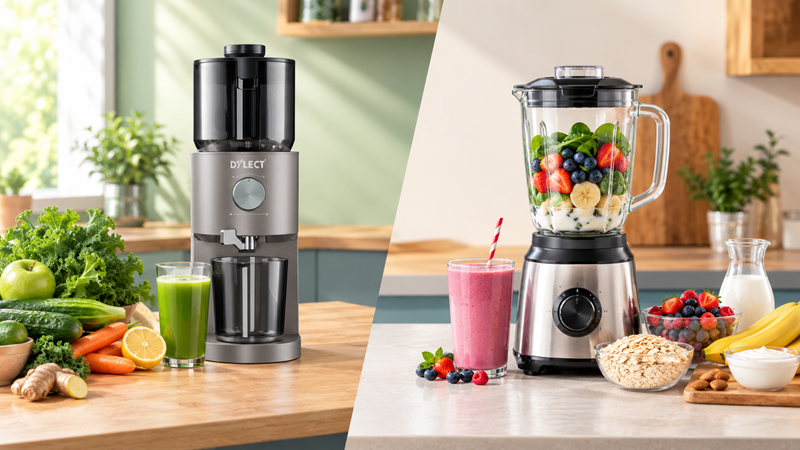
Fresh fruit and vegetable drinks are an easy way to add variety to your daily diet. However, when choosing between a cold press juicer and a blender, many people wonder which appliance is better for their kitchen. Both can turn fresh produce into nutritious drinks, but they work differently and produce different results.
Understanding these differences can help you decide whether you need a slow juicer machine, a blender, or both.
What Is a Cold Press Juicer?
A cold press juicer, also known as a slow juicer or masticating juicer, extracts juice by slowly crushing and pressing fruits and vegetables. It separates the liquid from most of the solid pulp, producing a relatively smooth drink.
A cold press slow juicer is particularly useful for making fresh juices from ingredients such as carrots, apples, beetroot, cucumber, spinach, celery, and ginger. Depending on the model, it can also handle other fibrous fruits and vegetables.
Since it operates at a slower speed than a conventional centrifugal juicer, it generally produces less foam. However, the amount of juice extracted depends on the ingredients and the machine's design.
What Is a Blender?
A blender uses rotating blades to break down fruits, vegetables, and other ingredients into a thick mixture. Unlike a juicer, it retains the edible pulp and fibre instead of separating them from the liquid.
Blenders are suitable for preparing smoothies, milkshakes, fruit drinks, sauces, and other recipes. You can also combine ingredients such as bananas, berries, yoghurt, oats, nuts, and milk to create a filling smoothie.
Because the fibre remains in the drink, smoothies are generally thicker than freshly extracted juice. Blenders are also versatile appliances for people who want to prepare more than beverages.
Cold Press Juicer vs Blender: Key Differences
1. Juice and Smoothie Texture
A cold press juicer produces a relatively thin liquid by separating juice from most of the pulp. This makes it a suitable choice if you prefer smooth, light fruit and vegetable juices.
A blender retains the ingredients' pulp and fibre, resulting in a thicker consistency. If you enjoy smoothies with a creamy texture, a blender may be the better option.
2. Fibre Content
One of the main differences is how each appliance handles fibre.
A juicer separates most insoluble fibre into the pulp, although some fibre and other plant compounds may remain in the juice. A blender processes the whole edible ingredient, retaining its fibre.
Fibre supports digestive health and can help you feel full for longer. Therefore, if retaining fibre is your priority, blending whole fruits and vegetables is generally a better choice.
3. Nutritional Differences
Both juicing and blending can help you include more fruits and vegetables in your diet. However, neither method is automatically healthier than the other.
Fresh juice contains vitamins, minerals, and other compounds from the produce, but removing much of the fibre changes its nutritional profile. Blending retains the edible pulp, skin, and fibre that would otherwise be separated during juicing.
The nutritional value also depends on the ingredients you use. Fruit-heavy juices can contain substantial natural sugar, so balancing fruits with vegetables and maintaining a varied diet is important.
4. Types of Ingredients
A slow juicer machine is useful for extracting juice from a variety of fruits and vegetables, including leafy greens and fibrous ingredients. The results depend on the model and the produce being processed.
A blender is more flexible when preparing recipes that require whole ingredients. It can make banana smoothies, milkshakes, blended fruit drinks, and mixtures containing yoghurt, oats, or other additions.
Your choice should depend on the drinks and recipes you prepare most frequently.
5. Cleaning and Maintenance
Cleaning is another factor to consider before buying either appliance.
A cold press juicer typically has separate components for feeding produce, extracting juice, filtering pulp, and collecting the juice. These parts need to be cleaned after use to prevent pulp from drying and becoming difficult to remove.
A blender usually has fewer components to clean, particularly when preparing simple smoothies. However, its jar and blades still require proper cleaning after every use.
If you plan to prepare fresh drinks every morning, consider how much time you are comfortable spending on preparation and cleanup.
Which One Should You Choose?
The right appliance depends on your daily routine and preferences.
Choose a cold press juicer if:
You prefer smooth, freshly extracted fruit and vegetable juice.
You regularly juice ingredients such as carrots, beetroot, cucumber, or leafy greens.
You want an appliance designed specifically for juice extraction.
You do not mind separating and cleaning the juicer's components after use.
Choose a blender if:
You prefer thick, fibre-rich smoothies.
You enjoy making milkshakes, sauces, and blended drinks.
You want to retain the edible pulp of fruits and vegetables.
You need a versatile appliance for different kitchen preparations.
If you enjoy both freshly extracted juices and smoothies, having both appliances may be useful, provided you have enough kitchen space and expect to use them regularly.
What to Check Before Buying a Slow Juicer Online
If you have decided that juicing better suits your needs, compare a few important features before purchasing a slow juicer online.
Motor performance: Look for a motor suited to the ingredients you intend to juice regularly.
Feeding chute: A wider chute may reduce the amount of chopping and preparation required.
Pulp separation: Check how the machine collects juice and separates pulp.
Ease of cleaning: Removable components and a straightforward assembly can make everyday use more convenient.
Size and capacity: Consider your kitchen counter space and the quantity of juice you typically prepare.
Warranty and support: Review the warranty, available service support, and replacement-part availability.
You can explore the Dylect slow juicer range to compare available models and choose one that suits your household's juicing needs.
Final Thoughts
The difference between a cold press juicer and a blender comes down to how they process ingredients. A cold press slow juicer separates juice from most of the pulp, while a blender combines whole ingredients into a thicker drink that retains its fibre.
Neither appliance is the perfect choice for everyone. If you mainly enjoy fresh fruit and vegetable juices, a slow juicer machine may be worth considering. If you prefer smoothies and want to retain the fibre, a blender may be more suitable.
Before buying, think about your preferred drinks, kitchen space, cleaning routine, and budget. Choosing an appliance that fits your everyday habits will make it easier to use consistently.