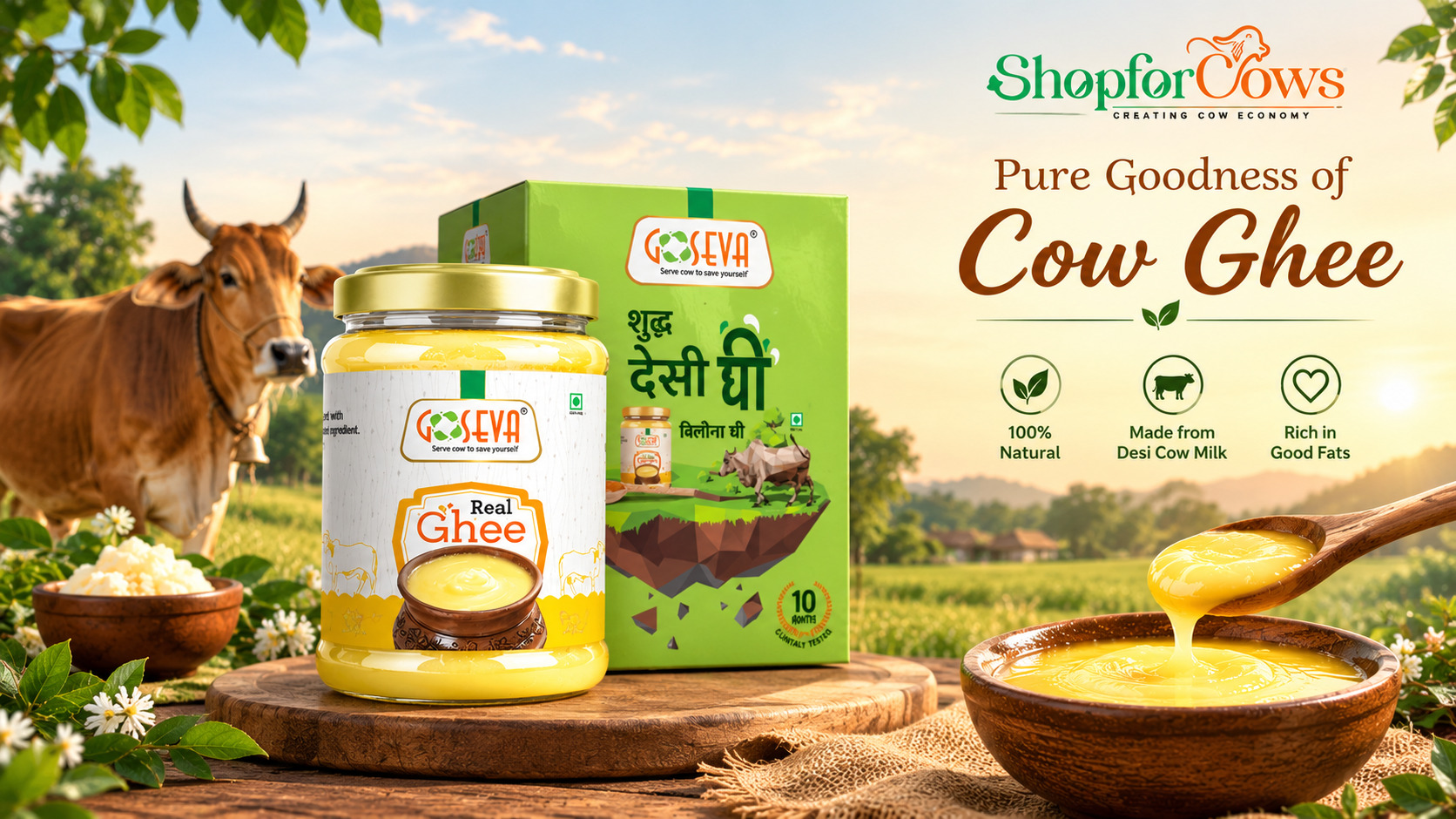
Ghee has been a familiar part of Indian kitchens for generations. It is commonly used for cooking, adding flavour to food, preparing sweets, and in traditional practices. Among the different types available today, cow ghee is one of the most commonly searched options. However, terms such as pure ghee, cow ghee, A2 ghee, and bilona ghee can sometimes make choosing a product confusing.
Understanding these terms is important because they do not always describe the same thing. The type of milk used, method of preparation, ingredients, and product quality can all influence the final ghee. Instead of choosing a product only because of a popular label, it is useful to understand what you are actually buying.
For anyone considering cow ghee, checking the source, ingredients, preparation method, packaging, and product information can make comparison easier. Here is a simple guide to understanding cow ghee and choosing a suitable option for your household.
What Is Cow Ghee?
Cow ghee is ghee prepared using milk or milk-derived butter from cows. In simple terms, ghee is a type of clarified milk fat made by heating butter so that moisture is removed and the milk solids separate from the fat.
The resulting ghee has a rich aroma and flavour and can be used in different foods. It may be added to dal, roti, rice, khichdi and other dishes or used while preparing sweets and traditional recipes.
Not every cow ghee is prepared in exactly the same way. The source of the milk and the production process may differ between products. This is why reading the product label is important rather than assuming that all cow ghee will be identical.
Cow Ghee vs Pure Ghee: What Is the Difference?
A common question is: Is cow ghee better than pure ghee? This comparison can be misleading because “cow ghee” and “pure ghee” describe different things.
Cow ghee refers to the source of the ghee—it is made from cow's milk. The word “pure,” on the other hand, is generally used to indicate that the product is ghee without unwanted mixing or substitution.
Therefore, cow ghee can itself be pure cow ghee.
Instead of treating “cow ghee” and “pure ghee” as two opposite categories, look at the actual product information. Check what type of milk has been used, what ingredients are listed, and how the manufacturer describes the preparation process.
What Is A2 Cow Ghee?
A2 cow ghee is another term commonly seen when shopping for ghee. The “A2” description relates to the type of beta-casein protein associated with the milk used to prepare the ghee.
However, buyers should not assume that every cow ghee product is automatically A2 ghee. If A2 is important to you, check whether the specific product clearly identifies the milk source and makes an A2 claim.
Similarly, terms such as “desi cow ghee” and “A2 cow ghee” should not automatically be treated as interchangeable unless the product information supports that description.
What Is Bilona Cow Ghee?
Bilona refers to a traditional method associated with preparing ghee. Traditionally, milk is converted into curd, the curd is churned to separate butter, and that butter is then heated to prepare ghee.
This is different from simply describing the animal source. For example, “cow ghee” tells you that the source is cow's milk, whereas “bilona” describes a preparation method.
Therefore, if you specifically want bilona cow ghee, check the product description or label to confirm the method used.
Which Cow Ghee Is Best for Health?
There is no single cow ghee that can be called the “best for health” for every person. Individual nutritional needs, overall diet, portion size, medical conditions, and lifestyle can differ considerably.
When selecting ghee, it is more useful to focus on product quality and clear information rather than relying on broad health claims.
Look for a product with clear ingredient information. The packaging should explain what you are buying and provide relevant details such as the manufacturer, quantity, nutritional information, storage instructions, and expiry or best-before information.
If you specifically want A2, bilona, or ghee made from a particular breed of cow, verify that information on the individual product rather than assuming it based on the general term “cow ghee.”
Ghee is also a concentrated source of fat. Therefore, how much you consume matters. People with specific dietary requirements or health conditions should consider professional dietary or medical advice when deciding how much ghee is appropriate for them.
How to Choose Good-Quality Cow Ghee
With many options available, a few simple checks can help you make a more informed purchase.
Check the Ingredients
Start with the ingredient list. It should clearly tell you what has been used to make the product. Avoid making a decision based only on words printed prominently on the front of the pack.
Understand the Source
If the source matters to you, check whether the product clearly states that it is made using cow's milk. For products marketed around a particular cow breed or milk type, look for specific information supporting that description.
Check the Preparation Method
Some buyers prefer traditionally prepared ghee. If you are looking specifically for bilona ghee or another preparation method, read the product details carefully.
Read the Label
Check nutritional information, net quantity, storage instructions, manufacturer details, and best-before information. A clear label makes it easier to understand and compare products.
Choose According to Your Needs
Price alone should not decide which ghee you buy. Consider how you plan to use it, how frequently your household consumes ghee, the quantity required, and the product information available.
How Is Cow Ghee Used in Everyday Food?
Cow ghee is versatile and can be included in many familiar meals. A small amount can be spread over roti or paratha, added to rice, dal or khichdi, or used while preparing certain vegetables and traditional dishes.
It is also widely used in Indian sweets and festive foods. The distinct taste and aroma of ghee can add richness to recipes without requiring complicated preparation.
Beyond cooking, ghee also has a place in various traditional and religious practices in India. Its exact use can differ between households, communities, and occasions.
Frequently Asked Questions About Cow Ghee
Is cow ghee the same as pure ghee?
Not necessarily. “Cow ghee” identifies the animal source, while “pure” describes the product's purity. A product can therefore be both cow ghee and pure ghee.
Is all cow ghee A2 ghee?
No. You should not assume that every cow ghee is A2 ghee. Check the individual product information if you specifically want an A2 product.
Is all cow ghee made using the bilona method?
No. Cow ghee can be produced using different methods. Look for a clear bilona claim if that preparation method is important to you.
Can cow ghee be used for everyday cooking?
Ghee can be used in many everyday foods, including roti, rice, dal, khichdi and various traditional recipes. The amount used should fit your overall diet and nutritional needs.
How should I choose cow ghee?
Check the ingredients, source, preparation method, nutritional information, packaging, manufacturer details and storage instructions. If a particular characteristic such as A2 or bilona matters to you, verify it on the specific product.
Which cow ghee is best?
There is no single option that is best for everyone. Choose based on clear product information, your intended use, dietary requirements, preferred preparation method and budget.
Final Thoughts
Cow ghee can be a useful ingredient for cooking, serving food, preparing traditional recipes, and certain cultural practices. When comparing different options, it is important to understand terms such as pure ghee, A2 ghee and bilona ghee instead of assuming they all mean the same thing. Check the source, ingredients, preparation method, label information and your own dietary needs before making a choice. A little attention to these details can help you select cow ghee that is suitable for your household and intended use.