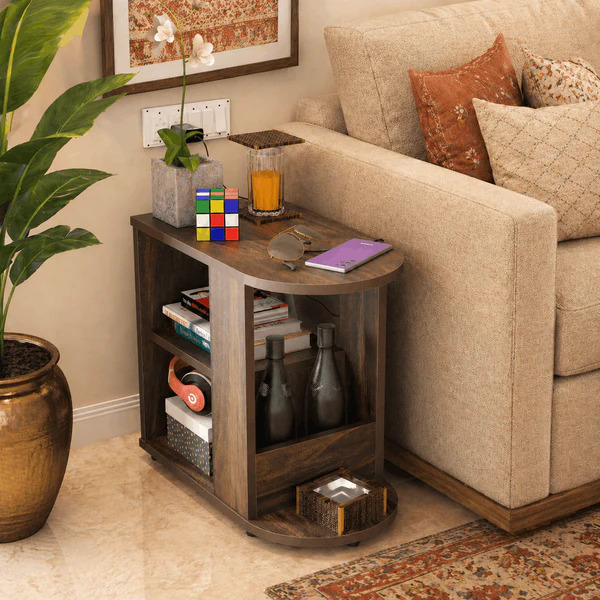
A bedroom should be comfortable, organised, and easy to use. While choosing a bed and wardrobe often gets the most attention, smaller furniture pieces also play an important role in making the room functional. A side table with storage is one such addition that helps keep everyday essentials close at hand without creating unnecessary clutter.
Whether you need space for books, your phone, medicines, a reading lamp, or other personal belongings, the right bedside table can make your daily routine more convenient. However, choosing the right one requires considering your bedroom size, storage needs, table height, material, and overall layout.
1. Consider Your Bedroom Size
Before buying a side table, measure the available space beside your bed. A table that is too large can make the bedroom feel crowded, while a very small one may not provide enough storage or surface space.
For a compact bedroom, choose a narrow table with a drawer or a small storage compartment. If you have a spacious bedroom, you can consider a wider design with multiple drawers or shelves.
Also, leave enough room to move comfortably around the bed and open drawers without obstruction. Measuring the available space before shopping helps you select furniture that fits properly.
2. Choose the Right Table Height
The height of your bedside table affects how easily you can access everyday items. Ideally, the tabletop should be close to the height of your mattress or slightly above it, depending on your preference and bed design.
This makes it easier to reach your phone, water bottle, reading glasses, or lamp while sitting or lying in bed.
Before purchasing, measure the height of your mattress from the floor. Compare it with the table dimensions to ensure that the furniture will be comfortable to use.
3. Check Your Storage Requirements
Different bedrooms require different amounts of storage. Think about the items you usually keep beside your bed and choose a design accordingly.
A side table with storage can help you organise these belongings without filling the tabletop with too many items.
Drawer storage: Suitable for keeping chargers, medicines, notebooks, and personal items out of sight.
Open shelves: Useful for books, magazines, and items you access frequently.
Cabinet storage: Provides enclosed space for belongings you prefer to keep hidden.
Combined storage: A table with both drawers and open shelves offers flexibility for different items.
Choose the storage arrangement that matches your daily needs rather than selecting a design simply because it has more compartments.
4. Select a Material That Suits Your Needs
The material affects the appearance, durability, maintenance, and price of your bedside furniture. Consider your budget and how frequently you plan to use the table.
Wood and engineered wood are common options for bedroom furniture. Wooden designs can create a warm, natural appearance, while engineered wood can offer practical options in different finishes and designs.
When comparing materials, check the construction quality, surface finish, drawer mechanisms, and overall stability. A well-built table should remain steady during regular use and allow drawers or doors to open smoothly.
5. Match the Table with Your Bedroom Furniture
Your bedside table does not have to be an exact match for your bed or wardrobe, but its design should complement the room.
For example, a simple table with a neutral finish can work well in a minimal bedroom. A table with contrasting colours or a distinctive shape can add variety to a room with plain furniture.
Consider the colour of your bed frame, wardrobe, flooring, and other nearby furniture. Choosing compatible finishes helps create a balanced appearance without making the room look overcrowded.
6. Look for Useful Features
Small design details can make a difference in everyday use. When comparing options, check whether the table offers features that support your routine.
Smooth drawer movement makes frequently used items easier to access. Handles should be comfortable to use, while doors and drawers should fit properly. Rounded edges may also be worth considering in smaller bedrooms where walking space is limited.
If you use a lamp or charge your phone beside the bed, make sure the tabletop provides enough space for these items. Keep electrical cables arranged safely and avoid overcrowding the surface.
7. Consider Your Budget and Long-Term Use
A bedside table is an everyday furniture item, so it is worth considering more than its initial price. Compare dimensions, material, construction, storage capacity, and warranty details before making a purchase.
A basic design may be sufficient if you only need space for a few essentials. If you regularly store books, accessories, or personal belongings beside your bed, a model with additional storage may be more practical.
Choosing a suitable side table with storage can help you use your bedroom space more efficiently without buying a larger piece of furniture than you need.
8. Keep Maintenance in Mind
Bedroom furniture collects dust through regular use, particularly around drawer handles, corners, and open shelves. Choose a finish that is easy to clean and follow the manufacturer's care instructions.
Avoid leaving spills on the surface for extended periods, and do not overload drawers beyond their recommended capacity. Regular cleaning and careful use can help maintain the table's appearance over time.
Final Thoughts
Choosing the right bedside table involves balancing size, storage, comfort, material, and design. Measure your available space, check the table height against your mattress, and decide which items you want to store before comparing different options.
A side table with storage can help keep your bedroom organised while providing a convenient place for everyday essentials. By focusing on practical features and construction quality, you can select a table that suits your room and daily routine.
FAQs
1. What is the ideal height for a bedside table?
A bedside table is generally most convenient when its top is close to the height of your mattress or slightly above it. Measure your bed before choosing a suitable size.
2. Is a side table with storage useful for a small bedroom?
Yes. A compact table with drawers or shelves can provide additional storage without taking up too much floor space. Choose dimensions that allow comfortable movement around the bed.
3. What should I store in a bedside table?
You can store books, charging cables, reading glasses, medicines, notebooks, and other personal essentials. Keep frequently used items accessible and organise smaller belongings inside drawers.
4. Which material is best for a bedside table?
Wood and engineered wood are common choices. The best option depends on your budget, preferred appearance, maintenance requirements, and the quality of the construction.
5. Should bedside tables match the bed?
No. Matching furniture can create a coordinated appearance, but complementary colours and finishes can also work well. Choose a design that suits the overall bedroom layout.
6. How do I choose a side table with storage for my needs?
Consider your available space, mattress height, storage requirements, material, and budget. Compare drawer and shelf arrangements to find a table that suits your daily routine.